
……………..
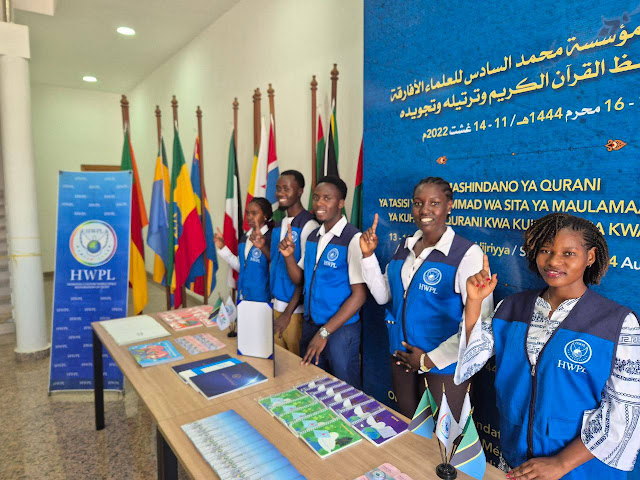
HWPL Tanzania hosted the International Religious Peace Academy (IRPA) in Dar es Salaam, bringing together 500 participants including religious leaders, youth groups and community members. HWPL is an UN affiliated international NGO active in peace initiatives across interfaith, youth and civic sectors, and the program aimed to reinforce channels for inter-religious understanding to solidify local bond.
The event was structured in two stages: a unified first session in which all participants attended lectures on interreligious understanding, followed by a second session divided into sector-specific groups—religion, education, peace policy and youth—where participants discussed practical applications based on the first session’s content.
The first session addressed “Comparative Religious Doctrines and Their Application to Community Understanding,” while the second session discussed ethical education models, local conflict-mediation experiences, and practical communication methods for community engagement.
This structure reflected the current social climate in Tanzania, where urban poverty, youth unemployment, and information gaps between religious communities have contributed to recurring local tensions.

In recent years, the Tanzanian government has noted rising youth-related violence in Dar es Salaam and Arusha, as well as small-scale interreligious disputes reported by local media, often stemming from misunderstandings between faith groups.
In response to these challenges, HWPL Tanzania has carried out peace and ethics education programmes in universities, dialogue meetings with religious leaders, community-linked conflict-resolution workshops, and public awareness initiatives based on the DPCW framework across several regions.
In opening remarks, the JMAT representative stated, “Dar es Salaam’s multi-faith setting requires sustained spaces for dialogue, and continued engagement can support community stability.”
Following the event, HWPL Tanzania outlined next steps, including monthly small-group dialogue meetings with religious communities and universities, co-development of peace and ethics education materials for youth, translation support for IRPA resources for use in local religious institutions and quarterly roundtables for religious leaders. HWPL stated that these steps respond to current local needs, including concerns about declining moral values and youth instability, by establishing practical educational tools and collaborative structures.

.jpeg)
.jpeg)